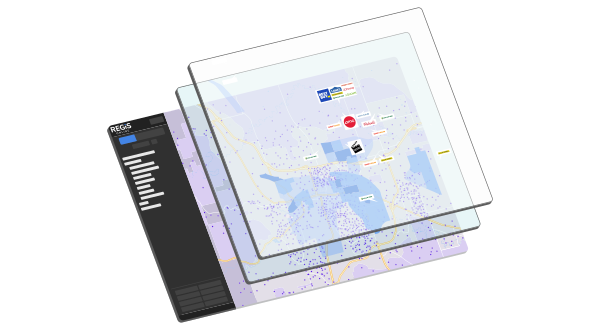
GIS Mapping software showing layered data.

GIS Mapping for Commercial Real Estate

Knowing an area from experience is a good start but having the data to support those hunches are even better. Guide investments with accurate data and easily communicate that data with GIS Mapping.

What Is GIS Mapping?

GIS mapping is the practice of layering geographic and spatial data onto a map to reveal patterns, correlations, and trends within an area. GIS, or Geographic Information System, is the underlying technology that captures, stores, and visualizes location-based data. In commercial real estate, GIS mapping is used to support site selection, market analysis, and competitive research by combining datasets like demographics, traffic counts, and merchant locations onto a single map. REGIS Online provides GIS mapping tools built specifically for commercial real estate, letting users layer proprietary data alongside REGIS Online's built-in datasets.

What Is GIS?

GIS, or Geographic Information System, is technology that captures, stores, and displays location information, or spatial data, on a map. This data helps identify correlations and trends to better understand an area.

GIS mapping leads to stronger decision making to ensure you're picking the right area for site selection, finding what a community lacks or needs, and that intuition is backed by factual data.

How Commercial Real Estate Professionals Use GIS Mapping

GIS mapping supports nearly every stage of a commercial real estate project, from first research to final presentation.

Site Selection

Layer demographics, traffic, and trade area data onto a map to evaluate whether a site fits your target customer.

More on Site Selection

Market Analysis

Visualize trends across a market with demographic shading and Market Match to see where opportunities exist.

About Market Optimization

Trade Areas

Build a radius, drive time, or custom trade area to study the market surrounding a specific site.

About Trade Areas

Competition

Map existing merchant locations to see which competitors and complementary retailers already operate nearby.

About Retail Mapping

Property Research

Layer active listings and property data directly onto your GIS map alongside market research.

More on Active Listings

Presentations

Turn your GIS research into a branded, client-ready map or report to communicate your findings.

See Samples
Layer Commercial Real Estate Data
on a Map

GIS data helps tell a location's story. Layering data on a map helps you pinpoint
patterns, find hotspots, see where your customers are, time of day traffic, and more.
With the right tools, you can visually communicate that story right on your map.

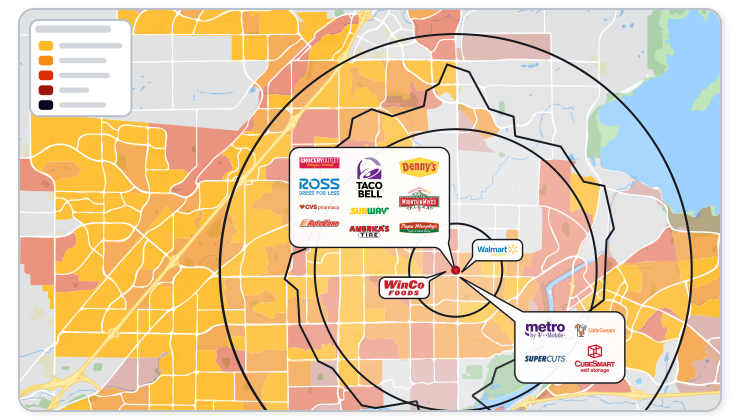
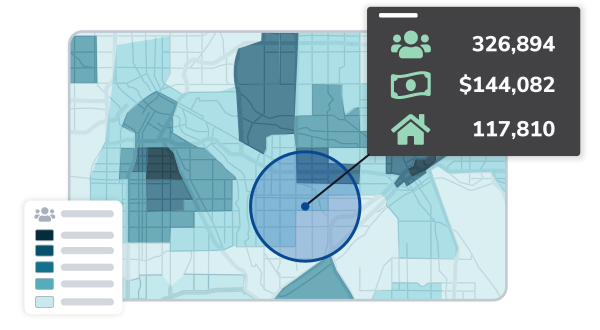
Demographic data visualized on a map

Demographics

Whether it be through a demographic shading on your map or a report, demographic data helps you understand the population in an area and instantly help spot trends.

See the Demographic Data
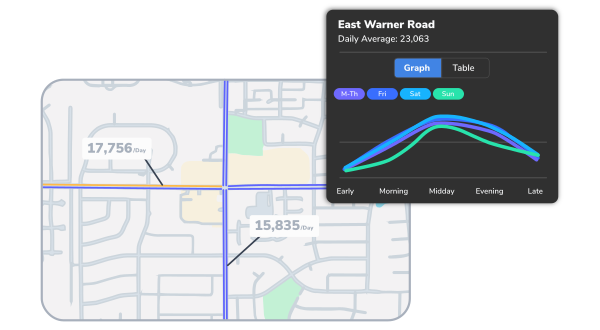
Time of day traffic trends

Traffic Counts

Make sure you're picking a location on the right side of the road
with traffic counts. See the flow of traffic with expansive coverage of road segments.

More on Traffic Counts
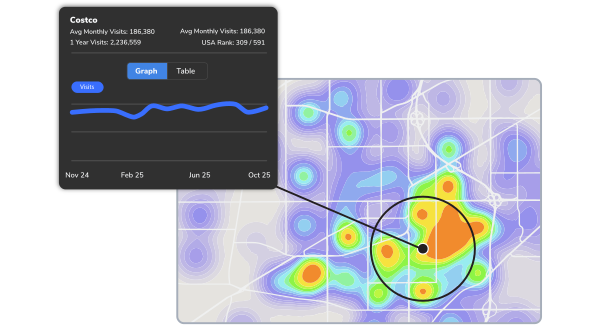
heatmap showing mobile data and customer origins

Mobile Data

Mobile data uses cell phone data to show how many visits a year a retailer receives and shows where those visitors are coming from.

More on Mobile Data
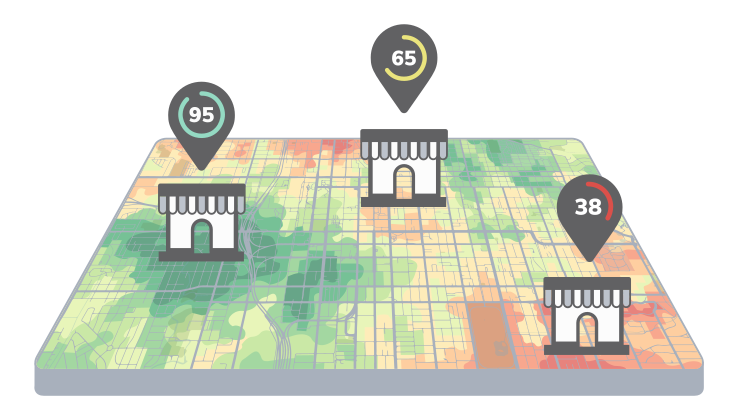
areas on a map being scored for how similar they are to a profile

Market Match

Create a profile from top performing locations and create a map that shows you areas that are similar to those properties. See how well an area matches your profile with a score out of 100.

Learn About Market Match

Combine Your Data with REGIS Location Data

GIS mapping is most powerful when your own data sits alongside REGIS Online's built-in datasets. With Layer Control, you can upload your own data, such as customer locations, potential sites, or other proprietary data, and style it directly on the map alongside demographics, traffic, and merchant data.

Learn About Layer Control

GIS Mapping vs. Commercial Real Estate Mapping

GIS mapping is the underlying technology, while commercial real estate mapping software is the complete platform built for CRE professionals to use that technology day to day.

GIS Mapping: The Technology

GIS mapping refers to the practice of layering spatial data onto a map to find patterns and correlations, the technical foundation behind location intelligence.

CRE Mapping Software: The Platform

REGIS Online's commercial real estate mapping software applies GIS mapping to real estate workflows, combining data, trade areas, and presentation-ready maps and reports in one platform.

Explore CRE Mapping Software

Use GIS Mapping for Site Selection

Bring your GIS research directly into the site selection process. Layer demographics, traffic counts, and trade area data onto a map to compare candidate sites side by side, backed by factual data instead of intuition alone.

See Site Selection Software

GIS Mapping and
Commercial Real Estate

GIS is essential when it comes to the commercial real estate industry. But finding a software that has reliable GIS data and user friendly map making capabilities can be tough.

No need to search any further, REGIS Online brings GIS and map making into one software. Learn more about how REGIS Online makes GIS mapping into a streamlined, time-saving process. Need programmatic access to REGIS Online's underlying data? Explore the Commercial Real Estate API.

Learn More

FAQ

GIS stands for Geographic Information System, technology that captures, stores, and displays location-based data on a map.

Commercial real estate professionals use GIS mapping for site selection, market analysis, trade area research, competition mapping, property research, and client presentations, all by layering spatial data onto a map.

Yes. With Layer Control, you can upload your own data, such as customer locations or potential sites, and style it alongside REGIS Online's built-in datasets.

GIS mapping is the underlying technology for layering spatial data onto a map. Commercial real estate mapping software, like REGIS Online, applies that technology to CRE-specific workflows such as trade areas, demographics, and site presentations.

REGIS Online is the best online gis program available

See How REGIS Online can help you

Let's connect and show what REGIS Online can do around one of your properties.